









How could Artificial Intelligence tools threaten cybersecurity?
As Artificial Intelligence Tools become more sophisticated, they can be used to launch cyber attacks that are more complex and difficult to detect. In this article, we will explore how AI tools could threaten cybersecurity and what measures can be taken to mitigate these threats.
Artificial Intelligence (AI) became popular today, and it is one of the most important terminologies in our current era, though it has been around since the 1950s.
AI relies on the development of systems and technologies that help to do tasks by the simulation of human intelligence and thought.
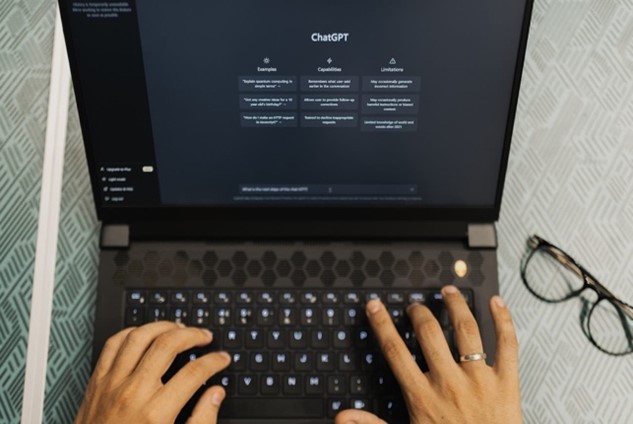
ChatGPT is one of the most popular examples of these AI tools today.
Which caused remarkable international interest during 2023.
In this article, we will explore and focus more on its impact on cybersecurity.
What is ChatGPT?
ChatGPT is a machine learning technique called deep learning that generates logical and comprehensible responses to conversations developed by OpenAI. ChatGPT’s continuous learning and improvement is achieved by training the model on a large amount of language data – Large language Model (LLM), and when activated in dialogues, ChatGPT can understand the content of the dialogue and generate meaningful responses, so it can be used in a wide range of fields, including customer service, education, media, marketing, designing, translating and in other fields.
What is the Artificial Intelligence tools?
Artificial Intelligence tools working mechanism depends on training it on a very large set of linguistic data, such as books, articles, and websites. This necessary so that the model can learn linguistic and typological relationships in texts.
Artificial Intelligence tools were also trained by entering long texts and using the model on a specific task, such as the task of predicting the next word in the text.
When you run any of the Artificial Intelligence tools on a specific text, the text is converted into a set of numbers and mathematical data that the model recognizes, based on the language rules the model learned during training, it generates the new text. AI tools can be used to create different texts such as articles, poetry, novels and even writing an e-mail.
Artificial Intelligence tools are a useful template for several services, such as making marketing plans, answering customer questions, and creating content. It is widely used in various fields such as digital marketing, translation, e-learning, and even in producing voiceover, creating designs, and many other services.
Despite its benefits of AI tools, it can be used for illegal activities that could threaten cyber security. Let us learn about these threats and risks.
What are the risks of using Artificial Intelligence tools on cybersecurity?

- Penetration:
This technology can be exploited to hack systems, due to many factors that may lead to their vulnerability. Among the reasons that can lead to hacking risks via Artificial Intelligence tools are:
Chatbots that use Artificial Intelligence tools can be exposed to several security vulnerabilities that attackers can exploit to enter the system and get sensitive information.
Artificial Intelligence tools can be used to create professional level fake e-mails and fraudulent actions, and this technique can convince users to give out sensitive information such as passwords and financial data.
Artificial Intelligence tools can be used to perform social engineering operations, where attackers can use this technique to manipulate users and get personal information from them.
- Vishing:
Artificial Intelligence tools can be used for voice recognition, which is known as “voice triggering”, as this technology is often used to generate fake voices for fraudulent acts.
- Malware:
Artificial Intelligence tools can be used to create malicious programs, as attackers can do so.
It can be used to create emails or multimedia text messages that appear from real and trusted sources. Victims are persuaded to provide sensitive information such as logins, passwords, or financial information. When victims provide this information, it can be used for fraud and hacking.
- Artificial Intelligence tools can also be used to create fake website pages in a professional way that appears as if it is real trusted websites. It can be used to collect sensitive information or install malware on victims’ devices.
- Artificial Intelligence tools can be used to conduct marketing fraud. This is where misleading advertisements and marketing content are created to convince people to buy unreliable products or services.
- Targeted Cyberattacks:
Intelligent technologies such as AI tools can be used to carry out targeted attacks on specific targets, such as companies and institutions, by:
- Obtaining sensitive information:
Artificial Intelligence tools can be used to mislead users that data is being collected from them for legitimate purposes, allowing attackers to get sensitive information about them and use it in future attacks.
- Avoid detection:
Attackers can use AI tools to communicate with victims, making it difficult to identify the source of the attack and verify the validity of the information exchanged.

Some other risks of using Artificial Intelligence tools.
- Discrimination and Prejudice:
It can be biased against specific categories of users and give more opportunities and privileges to other groups.
- Mistakes:
The use of AI tools can lead to grammatical errors in the responses it provides or even having outdated information, and this error can lead to misunderstandings and wrong actions or giving wrong answers due to old information.
- New Threats:
Smart technologies may lead to new threats in cybersecurity, as some smart systems may become vulnerable to hacking and exploitation.
How can Artificial Intelligence tools dangers be avoided?
To avoid these risks, users should be careful and attentive when interacting with suspicious messages or web pages. They should always verify the source before providing sensitive information.
Companies and organizations should develop strong security procedures and technologies to protect users’ data and address electronic fraud used in AI tools.
Conclusion:
The impact of Artificial Intelligence on cyber security can be positive or negative depending on how the technology is used.
For example, it can be used in distance learning and training, in improving the experience of customer service, providing quick and effective answers to them, in improving digital marketing and translating texts from one language to another, simplify the designing processes, and many other useful uses. It can also help in taking huge logs, security data, network traffic and analyze such information to find out about new vulnerabilities or attacks not being recognized.
But the negative uses of AI tools are through impersonation, creating texts that contain abuse and incitement, and creating fraudulent texts that lead to deception and harm to users.
Thus, artificial intelligence represents a challenge to cybersecurity, and it is important to take the necessary measures to reduce potential threats and maintain the integrity of computer and technical systems.
Organizations can introduce to their employees phishing simulations to reduce successful attacks while educating them.
And this is what Cerebra offers you, as it provides you with technical products and works to develop modern technologies for cybersecurity.
Share this article:
Popular

Major Data Leak Exposes 183 Million Email Accounts – What Happened and What It Means
Major Data Leak Exposes 183 Million Email Accounts – What Happened and What It Means A massive data leak came to light on October 28, 2025, with reports confirming that hundreds of millions of user credentials have been exposed online. Below, we break down the key facts of this breach – including its source, scale, and implications – and then explore how cybersecurity solutions from Cerebra.sa could help prevent or mitigate such incidents in the future. Overview of the October 28, 2025 Data Leak Source/Target: The breach did not stem from a single company hack, but rather from a trove ...
29th Oct 2025
Top 3 Phishing Types and How to Prevent Them in 2025
Phishing Types: Spear Phishing, Smishing & How to Avoid Phishing Emails The Enduring Threat: Why Phishing Attacks Are Getting Smarter Phishing types like spear phishing, smishing, and whaling are becoming more sophisticated in 2025, making it harder than ever to avoid phishing emails. This guide explores the most dangerous phishing types and shows you how to recognize and prevent them before they cause harm. The National Cybersecurity Authority (NCA) reinforces this urgency with its awareness message: ‘Stop for 5 seconds… Guard Your Cyberspace.’ What Is Phishing? Definition and Modern Tactics Phishing is a cyberattack where malicious actors impersonate trusted ...
5th Aug 2025
5 Critical Benefits of AI in Cybersecurity: Latest Data and Threat Defense in 2025
Using AI in Cybersecurity We should start learning using AI in cyber security because Hackers aren’t going to slow down any time soon and with a using AI! The next step to level up in protecting your business’s IT infrastructure is to integrate artificial intelligence. Studies have revealed that AI will strengthen the wall between systems and cyber threats. According to an IBM report, the global average cost of a data breach in 2025 is $4.4 million. Even though, it decreased by 9% vs previous year, the numbers are still way higher than few years back. They are elevating their approaches ...
1st Aug 2025
6 benefits of SMS Marketing you should know!
6 benefits of SMS Marketing you should know! Have you ever used SMS marketing to reach and communicate with your audience, if not! I’m sure that you will change your mind when you read about the benefits of SMS Marketing, continue this article to learn.. Many businesses are constantly seeking ways to interact with and attract new customers. Their joint objective is to reach a wider audience. To do so, communication is key. There are many ways for businesses to communicate with their audience, either by email, social media, or adverts, but the most beneficial marketing method, that is often ...
30th Jul 2025
MFA: the New Firewall In the 21st century
MFA- Multi Factor Authentication This article will help you to understand why Multi Factor Authentication( MFA )became an important architectural component in protecting us in the new Working From Home. Introduction In the early days, Cybersecurity (then called IT Security or information security) used to be merely a username and password. If you ask to someone, they would say I have a username and password so I am safe. It wasn’t much of the internet at that time. Eventually, people have learned that password isn’t sufficient to protect their digital assets. So Antivirus (AV) software flourished and we saw a ...
20th Jul 2025
What is the role of MFA? |ECC & SAMA Compliance
ECC & SAMA Compliance with MFA solution Do you know that there are a great MFA solutions in market today help your organization for ECC & SAMA Compliance? this article will show you how and we will provide you the most incredible MFA solution help to comply with Cybersecurity regulation in KSA.. With the world of cyber threats becoming more intense than ever, organizations need to comprehend the need for an improved cybersecurity framework. The universal goal is to protect the organization’s network from any outsider or insider threats, especially with the addition of remote work resulting from the COVID-19 ...
15th Jul 2025
The AI Revolution in Cybersecurity: A New Frontier of Defense
The AI Revolution in Cybersecurity: A New Frontier of Defense How is AI revolutionizing the cybersecurity industry? The rapid evolution of Artificial Intelligence (AI), especially with the rise of Generative AI (GenAI), is not just reshaping every industry; it is fundamentally transforming how we approach digital defense. As cyber threats grow in complexity and scale, AI is emerging as a powerful ally, offering innovative solutions to protect digital assets and infrastructure. For a full list of advantages, read about the 5 Benefits of Using AI in Cyber security. At Cerebra, we explore how AI is reshaping the cybersecurity landscape—from enhancing ...
6th Jul 2025
Uber security breach by 18-year-old Hacker!
Uber security breach by 18-year-old Hacker! Uber security breach proves that the largest companies can be hacked by teenagers! this news will undoubtedly shock you.. How Uber security breach happened? Uber recently experienced a cyberattack where an 18-year-old hacker accessed their systems by launching a successful social engineering attack on an employee. The hacker used stolen employee credentials to launch an MFA (Multi-Factor authentication) Fatigue attack. It is an attack where a victim receives multiple requests from their MFA application till it bothers them out leading them to eventually accept the request. The teenage attacker did not disclose how he ...
15th Jun 2025
Biometric Authentication: Is it reliable?
Biometric Authentication The history of bio-metrics used as an authentication tool dates to the 1800s. It was first used by the French to identify criminals through their fingerprints, which later the English police commissioner, Edward Henry, developed HCS “Henry Classification System”. It was a system that relied on fingerprints to identify people who have been prosecuted, it was a prime way of classification used by the police during the 20th century. As the years continued, new biological traits started being used in biometric authentication which in result are replacing traditional methods of authentication. Any invention introduced in the cyber world ...
10th Jun 2025